Why VAR Can Review Red Cards but Not Yellow Cards
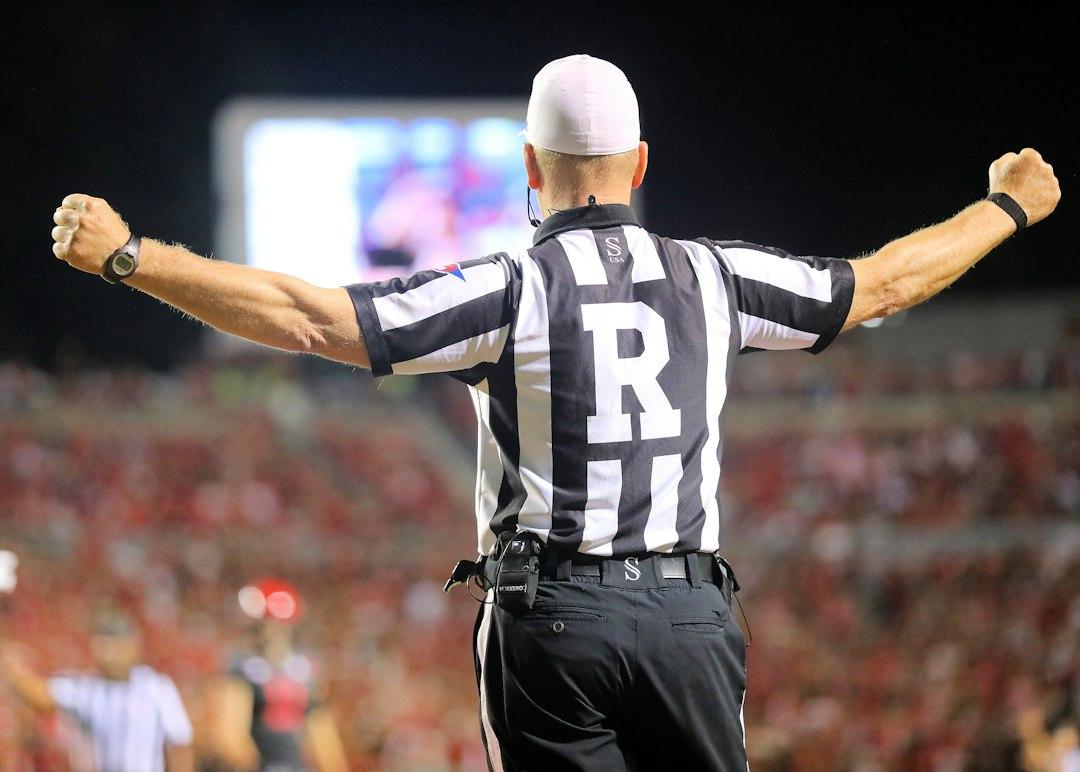
A referee in a black and white striped uniform
Gene Gallin on Unsplash
A referee flashes a yellow, the crowd erupts, and the replay shows the tackle was never worth a booking. So why can't VAR step in? Because the system was built for match-changing mistakes, not every 50/50 call.
TL;DR: VAR reviews straight red cards because they can be reduced or upgraded, but ordinary yellow cards sit outside the protocol to protect the flow of the game.
Under the IFAB VAR protocol, only four categories are reviewable.
The Four Reviewable Categories
The Laws of the Game list exactly what VAR may examine:
- Goal or no goal
- Penalty or no penalty
- Direct red cards, for specific offences only
- Mistaken identity when a card goes to the wrong player
Notice what is missing: the first yellow.
Why Red Cards Make the Cut
A straight red changes the shape of a match and can swing a league table over 38 matchdays. Reviewing it protects teams from a howler that cannot be undone.
Even then, VAR's powers are narrow. It intervenes only for denial of an obvious goal-scoring opportunity, serious foul play, violent conduct, spitting or biting, and abusive language. A second yellow card is off the menu.
What VAR Cannot Touch
- Two bookable offences adding up to a red
- A soft yellow for a tactical foul
- Simulation that fools the referee into a caution
- A foul in the build-up to a throw-in
The Yellow Card Problem
Yellows arrive in volume. Reviewing them would mean constant stoppages — exactly what fans already dislike about VAR. The IFAB also trusts the referee's in-match management, because a caution is a communication tool as much as a punishment.
The one loophole is mistaken identity, which is factual rather than subjective, so the error can be corrected. A missed second yellow, however decisive, stands.
Related News