What Does Overload Mean in Soccer Tactics?
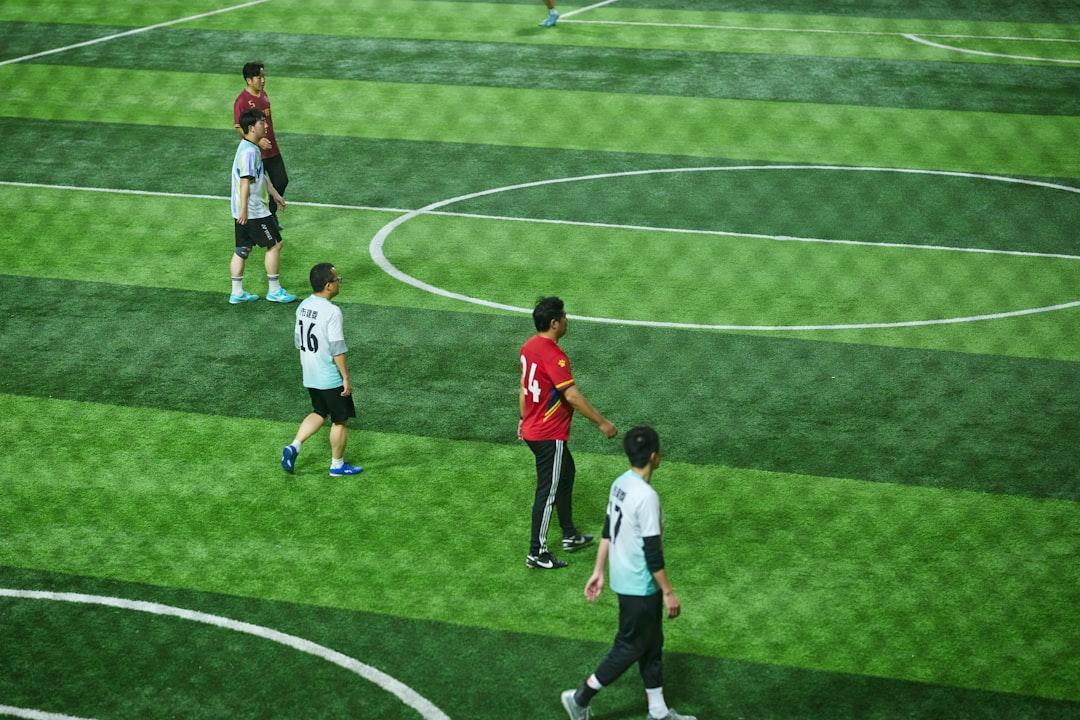
Soccer players on a green field during a game
Photo by Marco Verch on Unsplash
Watch any elite side and you will notice it: two or three players swarming one defender while a teammate stands totally free. That is an overload in soccer tactics — creating a numerical advantage in one area of the pitch.
TL;DR: An overload means outnumbering the opposition in a specific zone (say 3-v-2) to progress the ball or create a chance.
What Is an Overload in Soccer Tactics?
An overload is simply a local numerical advantage. Instead of attacking 11-v-11 across the whole pitch, coaches engineer small battles like 2-v-1, 3-v-2 or even 4-v-3 in a chosen area.
Coaches call this "creating superiority". The idea is to make the game simple somewhere on the pitch, even if you are outnumbered elsewhere.
The Two Common Types
- Numerical overload: more players than the opponent in one zone, the basic 3-v-2 on a flank.
- Qualitative overload: an even headcount, but far better players in that duel.
How Teams Create Overloads
Building overloads is the core of positional play, the possession model popularised by Pep Guardiola.
Typical methods include:
- A fullback overlapping to make it 2-v-1 against a winger.
- An inverted fullback stepping into midfield to create a 3-v-2 centrally.
- A winger hugging the touchline to stretch the pitch before a teammate attacks the space.
The opposite idea is isolation — the classic tactic of leaving a one-on-one for a dribbler like a prime Eden Hazard.
Why the Third-Man Run Matters
Overloads work best when a free teammate arrives late. Win the 3-v-2, then switch play to the man the defence forgot — a third-man run in its purest form.
Why Fans Should Care
Overloads explain so much of what looks like magic. Kevin De Bruyne finding space in the half-space, Trent Alexander-Arnold stepping into midfield, or a winger doubled up on by two fullbacks — all overload logic.
When your team struggles to break a low block, the answer is usually the same: create a spare man, then move the ball faster than the defence can shift. That is the whole game in one sentence.
Related News